Psilocybin use is on the rise—so much so that the past-year use rate among people aged 18–29 rose by 44% in 2023. The rate nearly tripled for adults over 30!
So, are all those people at risk of developing a mushroom addiction at one point? Is there even such a thing as mushroom addiction?
In short, most research shows that shrooms have a relatively low risk of addiction, at least when compared to other illicit drugs. However, there’s still the tolerance aspect and the negative psychological side effects to worry about.
Read on to find out more about the different dangers of using psilocybin mushrooms, the legal aspect, and when it might be time to seek professional help.

How Shrooms Work: A Quick Overview of Psilocybin and Psilocin
Before we go over the addiction potential, let’s check out how psychedelic mushrooms affect the brain.
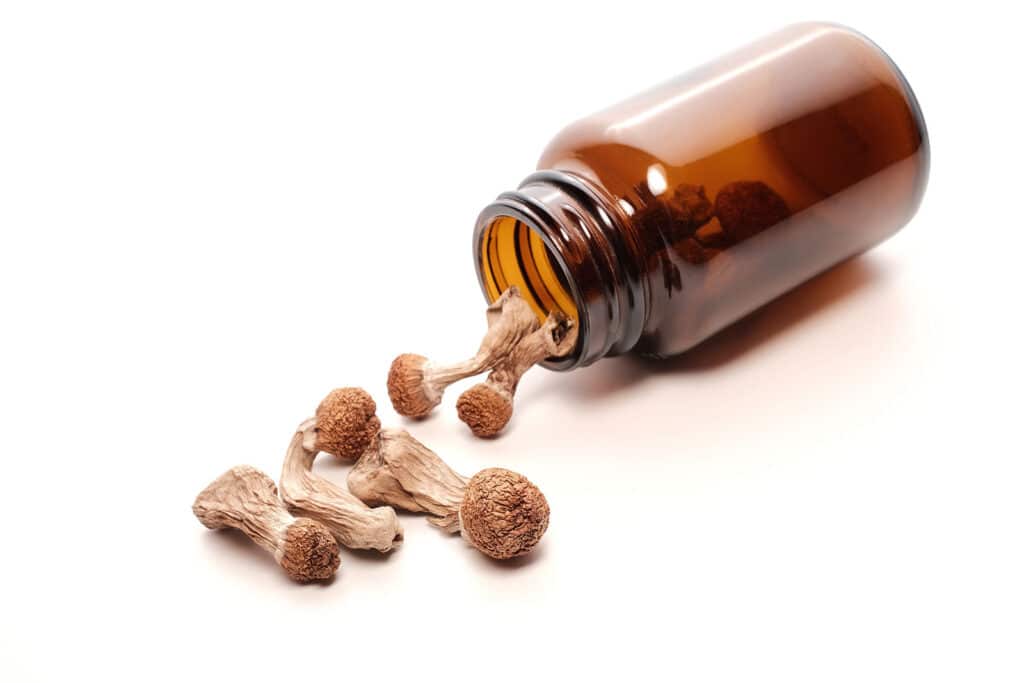
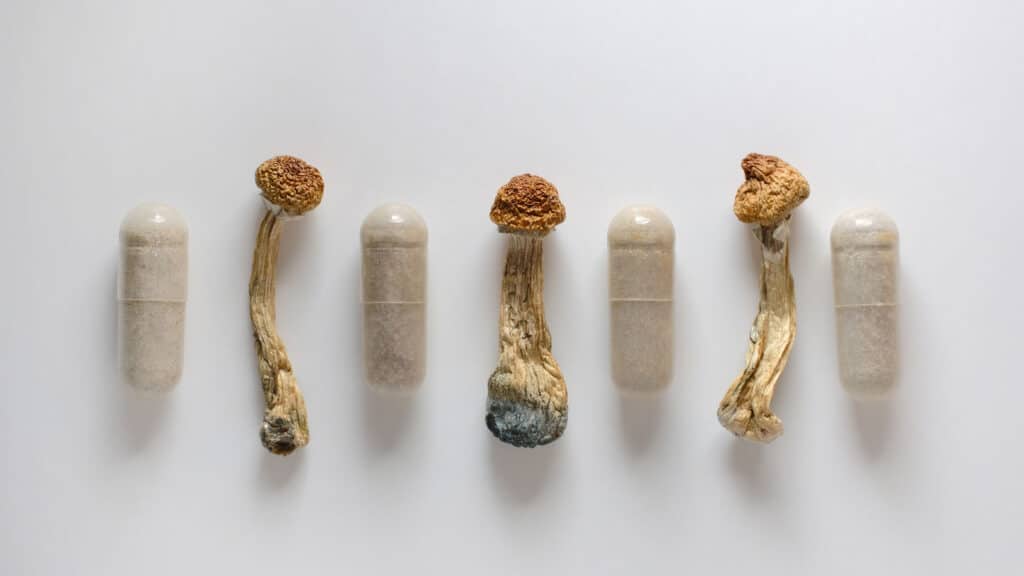
Shrooms contain a compound called psilocybin. When someone ingests the shroom (fresh or dried), their body breaks down the psilocybin and converts it into another compound called psilocin.
Psilocin is the main psychoactive agent at work here. It interacts with different 5-HT receptors, changing patterns of brain activity and serotonin function. The areas affected the most are the ones responsible for reflective thinking, hence why shrooms are mind-altering psychedelics.
Understanding the Addiction Potential of Magic Mushrooms
It’s hard to say for sure how addictive hallucinogens are, in general. Some are more addictive than others, and more research is needed in this area.
But let’s take a closer look at magic mushrooms in particular and what sort of damage they can do over time.
Tolerance to Psilocybin vs. Physical Dependence
While the addiction risk is low, there’s still a chance that long-term psilocybin users will develop tolerance.
Tolerance means that your body will get used to the substance. And whatever dose you used to take will no longer produce the “desired” effect. You’ll need to increase the consumed amount over time just to get the same hallucinogenic effects.
It’s unlikely, however, that shroom use will result in physical dependence.
Drugs that do cause dependence are generally considered more dangerous because they force the body to rely on them. Without the drug, your body can no longer function normally. This makes the detox phase quite hard, with intense withdrawal symptoms and severe cravings.
While psilocybin does not appear to cause physical dependence in the same way as opioids or alcohol, this does not mean it is safe or risk-free. People can still develop tolerance, experience intense psychological side effects, or misuse the drug in ways that harm their mental health, relationships, and overall wellbeing. For some, repeated use can contribute to hallucinogen use disorder, which requires professional support.
Hallucinogen Use Disorder Risk Factors
Although shrooms are typically not physically addictive, some people are more prone to hallucinogen use disorders.
Here are some factors that might contribute to psychedelic mushroom misuse:
- Genetic tendencies
- A co-occurring substance use disorder (SUD)
- Trauma or intense mental health disorders
3 Possible Consequences of Magic Mushroom Use
Even though addiction is rarely an issue with shrooms, there are still consequences to worry about.
Psilocybin Use Can Make You Engage in Risky Behaviour
People can engage in dangerous behavior after ingesting psilocybin mushrooms (or any substance laced with psilocybin). Reckless driving and walking into traffic are two possible scenarios. The person could also become aggressive and a risk to the well-being of others.
After all, psilocin can seriously impair a person’s ability to discern fantasy from reality and awareness of their surroundings.
There’s a Higher Poisoning Risk When You Mix Shrooms and Alcohol
According to the National Institute on Drug Abuse (NIDA), the toxicity risk that comes with magic mushroom abuse is relatively low. But an overdose could still cause a longer and more intense trip with psychotic symptoms.
Plus, psilocin can interact with other drugs and illicit substances. For instance, mixing shrooms and alcohol can increase the poisoning risk and cause seizures, breathing problems, and a slow heart rate.
You Might Suffer Short-Term and Long-Term Psychological Effects
People use shrooms recreationally for their psychedelic effects. They chase the euphoria, derealization, and reduced anxiety.
In some cases, psilocybin also creates temporary synesthesia, which is when sensory information gets routed through unrelated senses. As a result, the person might say that they’re “tasting words” or “hearing colors.”
That said, not all mushroom trips are pleasant. There are serious side effects that you should be aware of before deciding to ingest these psychedelics, especially if you already have a history of mental health issues.
General Adverse Effects
There are several things that could go wrong with a shroom trip.
While some people find that shrooms calm their anxiety, others experience panic attacks shortly after the drug kicks in. Drug misuse can cause mild sleep disturbances as well. But these disturbances are usually limited to one night after ingestion.
And since psilocybin activates serotonin receptors in the prefrontal cortex, it can also lead to mood swings and altered cognitive abilities.

Panic attacks, sleep problems, and mood swings aside, other side effects to watch out for are:
- Nausea and vomiting
- Increased heart rate and blood pressure
- Psychosis
- Agitation
- Schizophrenia-like symptoms
- Muscle twitches
- Lack of coordination
Hallucinogen-Persisting Perception Disorder (HPPD)
Any of the previous general side effects would be enough to create a bad mushroom experience. But yet another concern with mushroom use is the flashbacks.
Some people see flashbacks of the trip long after it’s done. If the person keeps re-experiencing these visual hallucinations over and over again, then they’ve waded into hallucinogen-induced persisting perception disorder (HPPD) territory.
Around 4.2% of people who take any illicit hallucinogen substance recreationally end up suffering from HPPD. So, it’s not a common issue, but it can be extremely unpleasant.
Unfortunately, there’s no cure for the disorder.
Healthcare professionals might prescribe medications to relieve the flashbacks. However, the number one recommendation remains avoiding stress and substance abuse. Tackling co-occurring mental health conditions (anxiety or depression) can be helpful as well.
Of course, the treatment options will vary based on the intensity of the side effect. After all, there are two types of HPPD. In the first type, the patient mainly suffers from brief flashbacks.
Type 2, on the other hand, comes with more disturbing and persistent changes. This type could last months or years. Yes, even if you’ve stopped using shrooms completely.
3 Factors That Determine a Person’s Reaction to Psilocybin
So far, we’ve explored how shrooms, although not necessarily addictive, can cause disturbing trips and persistent flashbacks. The question now is this: Is it possible to predict which way a specific person’s experience will go?
The short answer is no. There are many factors at play, and it’s not possible to say for sure how this illicit substance use will play out for each individual. In fact, the only guaranteed way to avoid a bad trip is to steer clear of magic shrooms entirely.
However, it’s worth noting that the top three factors are:
- The Set: The person’s personality, mental state, and expectations at the time.
- The Setting: The person’s surroundings, including their relation to the people nearby.
- The Drug: The quantity, quality (shrooms can actually go bad), and potency of the ingested psilocybin mushrooms.
The Legal Aspect of Magic Mushroom Use
Regardless of perceived addiction risk, the legal consequences of psilocybin possession, use, or distribution are severe. Being caught with even a small amount can result in arrest, fines, or incarceration. This is true even in states exploring decriminalization — laws remain complex and inconsistent. It’s important for individuals to understand that psilocybin use carries not only health risks but also serious legal repercussions.
Psilocybin is a Schedule I drug based on the classification of the Drug Enforcement Administration (DEA). Schedule I substances are actually defined as drugs with high potential for abuse and no valid medical use. And while research is being done on the medical application of shrooms, there’s still no widely accepted use.
Side Note: LSD, marijuana, ecstasy, and heroin are also Schedule I substances.
When to Seek Professional Help
If you experience any disturbing psychotic symptoms during or after a mushroom trip, don’t hesitate to seek professional help. It’s also recommended to get help if you notice changes in your breathing, heart rate, or blood pressure.
These can all be warning signs of an overdose or a bad reaction to psilocin products.
Of course, you’ll want to see your healthcare provider if you believe you’re suffering from shroom-related HPPD as well.
If psilocybin use is disrupting your life, causing flashbacks, or leading to reckless behavior, professional help is strongly recommended. Licensed treatment providers can help address hallucinogen use disorder, co-occurring conditions like anxiety or depression, and provide safe, evidence-based strategies for recovery. Seeking help early can reduce long-term harm and restore stability.

Explore Treatment Options for Hallucinogen Use Disorders Today
Just because the addiction risk of magic mushrooms is low doesn’t mean they can’t burden your life in more than one way.
There’s always a risk that you’ll suffer from disturbing flashbacks during and long after a bad trip. Even if the trip wasn’t necessarily that bad, it can still push you to act recklessly, putting yourself and others in harm’s way.
Over time, you might even develop tolerance to psilocin and need to consume more mushrooms just to get that sense of euphoria.
There’s still hope, though. Contact us today if you or a loved one has trouble kicking a hallucinogen use habit. Our team is happy to discuss the available treatment programs and different levels of care.
Disclaimer: Psilocybin (the active compound in magic mushrooms) is classified as a Schedule I controlled substance in the United States and remains illegal in most jurisdictions. This article is for educational purposes only. We do not promote or encourage the use of illegal substances. If you are struggling with substance use, please seek help from a licensed medical professional or treatment provider.
Helpful Resources
- DEA psilocybin fact sheet
- Update on the legal status of magic mushrooms in New Jersey
- Online psychedelic support community
Written by: The Garden State Treatment Center Editorial Team
Published on: August 30, 2025
Updated on: September 18, 2025