Eating disorders affect an estimated 28.8 million Americans over the course of their lifetimes. That’s not a small number. And yet, despite how common they are, most people who struggle never receive treatment.
In fact, the gap between how many people are affected and how many actually get help is a big part of why understanding eating disorders matters so much.
Maybe you’ve noticed something in yourself. A complicated relationship with food, a pattern of thinking about your body that feels hard to shake. Or maybe it’s someone you love, and you’re not quite sure what you’re seeing or what to do next.
Either way, you’re in the right place. This guide walks you through what eating disorders actually are, who they affect, what the warning signs look like, and, most importantly, what treatment involves and how to find the right support.

What Is an Eating Disorder?
Most people have had a moment of feeling self-conscious about their body or guilty after eating something. That’s a pretty universal human experience. However, an eating disorder is something quite different.
Eating disorders are serious mental and physical illnesses. They involve severe, persistent disturbances in eating behavior.
Such disorders go far beyond occasional concerns about food or appearance. We’re talking about patterns of thinking and behavior that can take over a person’s life and cause real, lasting harm to their health.
So what drives them? In short, there’s no single cause. Research points to a complex mix of factors working together, including:
- Biological and genetic predisposition: Some people are simply more vulnerable due to their neurobiology, hormonal makeup, or family history
- Psychological factors: These include low self-esteem, perfectionism, anxiety, or difficulty managing emotions
- Sociocultural pressures: Diet culture, social media, and messaging around body image all play a significant role
- Environmental triggers: Trauma, stress, or major life transitions can bring underlying vulnerabilities to the surface
Put simply, eating disorders aren’t a choice, a phase, or a lifestyle. They’re complex illnesses with real causes, and they’re treatable.
Who Gets Eating Disorders?
There’s a common image people have when they think of someone with an eating disorder: young, female, and visibly thin. That stereotype isn’t only inaccurate, it’s actually harmful, because it stops a lot of people from recognizing what they or someone they love is going through.
In reality, eating disorders affect people of every gender, age, race, body size, and background. That means men, older adults, athletes, and people in larger bodies are all affected.
Additionally, fewer than 6% of people with eating disorders are medically classified as underweight. In fact, people in larger bodies face some of the highest risks.
Who Is Most Vulnerable to Eating Disorders?
Women and girls are disproportionately affected, with around 15% experiencing an eating disorder by their 40s or 50s.
However, men are far from immune. They represent up to 25% of all eating disorder cases, and they’re significantly less likely to be diagnosed or treated because the condition is so often dismissed as a “woman’s problem.”
Young people are also particularly at risk. Studies show that 22% of children and adolescents already display unhealthy eating behaviors, and by age 14, the majority of girls are actively trying to lose weight.
LGBTQ+ individuals face striking disparities, too. Overall, LGBTQ+ youth are three times more likely to develop an eating disorder compared to their straight peers.
Further, race and ethnicity play a role in who gets diagnosed and treated. Black, Indigenous, and People of Color develop eating disorders at similar rates to white people, but are about half as likely to receive a diagnosis.
Types of Eating Disorders
Understanding the different types of eating disorders matters. Not just for awareness, but because each one looks different, presents differently, and requires its own treatment approach.
The following are some of the most common ones:
Anorexia Nervosa
Anorexia is probably the most widely recognized eating disorder. It’s also one of the most misunderstood.
People with anorexia severely restrict their food intake, often driven by an intense fear of gaining weight and a distorted perception of their own body.
As such, it’s the most medically dangerous. Anorexia has the highest case mortality rate of any mental illness, and the risk of suicide among those with it is 18 times higher than in those without an eating disorder.
Common signs include:
- Dramatic or noticeable weight loss
- Preoccupation with calories, food, and dieting
- Avoiding meals or making excuses around food
- Wearing layers of clothing to hide weight loss
- Maintaining a rigid, excessive exercise routine regardless of illness or injury
Bulimia Nervosa
Bulimia involves cycles of binge eating followed by compensatory behaviors, such as self-induced vomiting, laxative use, fasting, or excessive exercise.
Unlike anorexia, people with bulimia often maintain an average body weight, which makes it harder to detect from the outside.
Typical signs are:
- Eating large amounts of food in short periods, often in secret
- Frequent trips to the bathroom after meals
- Dental erosion, mouth sores, or a swollen jaw from repeated purging
- Using excessive amounts of gum, mints, or mouthwash
- Cycles of restricting food followed by episodes of bingeing
Pica
Pica is characterized by persistently eating things that aren’t food and carry no nutritional value. Things like chalk, soil, paper, hair, paint, or ice. To meet the clinical threshold, the behavior needs to have lasted at least a month and be considered developmentally inappropriate.
Pican can also occur alongside other conditions, including intellectual disabilities, autism, and pregnancy. More importantly, it carries real physical health risks, depending on what is being consumed.
Binge Eating Disorder (BED)
Binge eating disorder is actually the most common eating disorder in the United States. People with BED experience recurring episodes of eating unusually large amounts of food in a short period of time, often feeling a complete loss of control during those episodes.
With that comes intense feelings of shame, guilt, and distress afterward. Unlike bulimia, there are no compensatory behaviors involved.
Some common signs include:
- Eating far beyond the point of fullness, often secretly
- Feeling unable to stop eating even when wanting to
- Hiding food or creating routines that make space for binge episodes
- Experiencing significant emotional distress after eating
Avoidant/ Restrictive Food Intake Disorder (ARFID)
ARFID is less about body image and more about a deeply limited range of foods a person is willing to eat. It’s not simply picky eating, though.
For those with ARFID, food avoidance can be driven by sensory sensitivities, fear of choking or vomiting, or a general lack of interest in eating altogether. It’s particularly common in children, and notably, between 13% and 58% of ARFID patients also have Autism Spectrum Disorder (ASD).
Look out for:
- An extremely narrow range of accepted foods that shrinks over time
- Fear of choking, vomiting, or having a bad reaction to food
- Significant weight loss or stunted growth in younger individuals
- No body image concerns or fear of weight gain, which distinguishes it from anorexia

Warning Signs: What Should I Be Looking For?
Whether you’re reading this for yourself or because someone in your life has you worried, knowing what to look for can make a real difference. After all, eating disorders thrive in silence, and the earlier they’re identified, the better the chances of recovery.
With that in mind, here’s what to pay attention to:
Signs to Look for in Yourself
Sometimes, the hardest person to see clearly is yourself. That said, if any of the following resonate, it’s worth taking them seriously:
- Your thoughts about food, weight, or your body are taking up a significant amount of your mental energy every day.
- You find yourself avoiding social situations that involve eating.
- You’ve developed specific rituals around food, such as eating in a particular order, cutting food into very small pieces, or rearranging it on your plate.
- You feel extreme guilt, shame, or anxiety after eating.
- Your mood is closely tied to what you have or haven’t eaten that day.
- You’re exercising not because it feels good, but because you feel like you have no choice, even when you’re exhausted, sick, or injured.
- You find yourself hiding eating behaviors from the people around you.
These patterns can feel quite normal when you’re inside them. That’s part of what makes eating disorders so difficult to recognize on your own.
Signs to Look for in Someone You Love
Watching someone you care about struggle is incredibly difficult, especially when they may not see it themselves or may not be ready to talk about it. Here are some behavioral and physical signs that something may be wrong.
The behavioral signs may include:
- Withdrawing from friends, family, and activities they used to enjoy
- Becoming secretive around food, mealtimes, or their body
- Making frequent negative comments about their weight or appearance
- Showing extreme mood swings, particularly around mealtimes
- Frequently checking their reflection or expressing intense dissatisfaction with how they look
As for the physical signs:
- Noticeable fluctuations in weight, either up or down
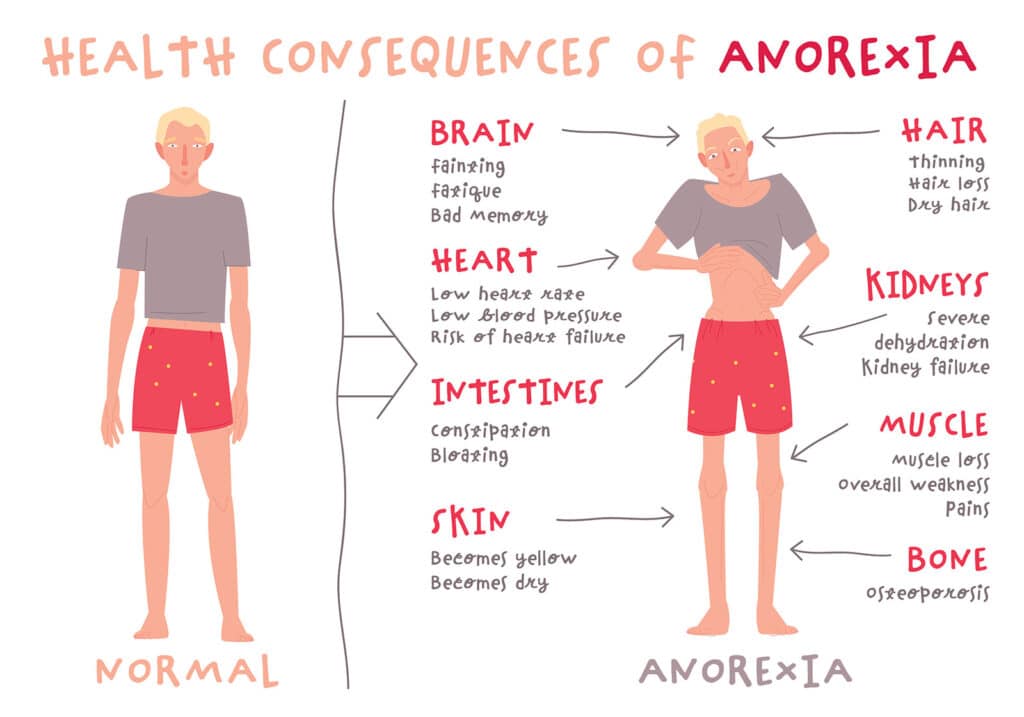
- Frequent dizziness, fainting, or complaints of always feeling cold
- Visible changes in skin, hair, or nails, such as dryness or brittleness
- Digestive complaints, like bloating, constipation, or acid reflux, that keep coming up
When Does Disordered Eating Become an Eating Disorder?
Disordered eating and eating disorders exist on a spectrum. Disordered eating refers to problematic patterns around food that cause distress or interfere with daily life, but don’t yet meet the full clinical criteria for a diagnosable condition.
It includes chronic yo-yo dieting, regular meal skipping, or a persistent, complicated relationship with certain foods. The key differences come down to frequency, severity, and the level of psychological distress involved.
However, whether or not a condition meets a clinical threshold, if it’s affecting your quality of life, it deserves attention.
Why Is Early Treatment So Important?
Research consistently shows that the sooner someone gets support, the better their outcomes tend to be. Eating disorders get harder to treat the longer they go unaddressed.
Physically, the longer the body is under the strain of an eating disorder, the greater the risk of serious, sometimes irreversible complications. These range from heart problems and electrolyte imbalances to bone density loss.
Mentally, eating disorder patterns become more entrenched over time. The thoughts and behaviors that start as coping mechanisms can solidify into deeply ingrained ways of thinking that take much longer to work through.
More importantly, eating disorders carry the highest case mortality rate of any mental illness. They account for an estimated 10,200 deaths every year in the United States alone. Further, only about 20% of adolescents with eating disorders ever seek treatment.

What Does Eating Disorder Treatment Actually Look Like?
Effective treatment is built around the individual and usually involves a team of professionals working together. Here’s what that typically includes:
Talk Therapy
Therapy is the cornerstone of eating disorder treatment. The most commonly used approaches include:
- Cognitive Behavioral Therapy (CBT): It helps identify and reshape the distorted thoughts and behaviors driving the eating disorder, particularly effective for bulimia and binge eating disorder.
- Family-Based Treatment: This therapy involves family members directly in the recovery process. It’s especially useful for younger patients.
- Dialectical Behavior Therapy (DBT): With DBT, we focus on emotional regulation, distress tolerance, and building healthier relationships. This therapy has proven helpful for binge eating and some bulimic behaviors.
Nutrition Support
Working with a registered dietitian who specializes in eating disorders is an important part of recovery.
This isn’t about being put on a diet, though. Instead, it’s about establishing consistent eating patterns and addressing any nutritional deficiencies the eating disorder may have caused.
Medical Monitoring
Eating disorders affect the body in serious ways, as mentioned above. As such, medical care is often needed alongside therapy to monitor and treat physical complications, such as heart irregularities and hormonal disruption.
Medication
Medication alone won’t treat an eating disorder. That said, antidepressants are sometimes prescribed alongside therapy, particularly for bulimia and binge eating disorder, to help manage co-occurring anxiety or depression.
Let’s Take the Next Step Together
If anything in this guide has resonated with you, whether for yourself or someone you care about, please know that what you’re feeling is valid, and support is available. Recovery is possible, and it starts with reaching out.
Our team at Garden State Treatment Center is here to help if you’re ready to talk to someone. We work with individuals and families navigating eating disorders and co-occurring mental health conditions. Reach out to us today and take that first step toward feeling better.
Written by: The Garden State Treatment Center Editorial Team
Published on: May 29, 2026
Updated on: May 29, 2026