

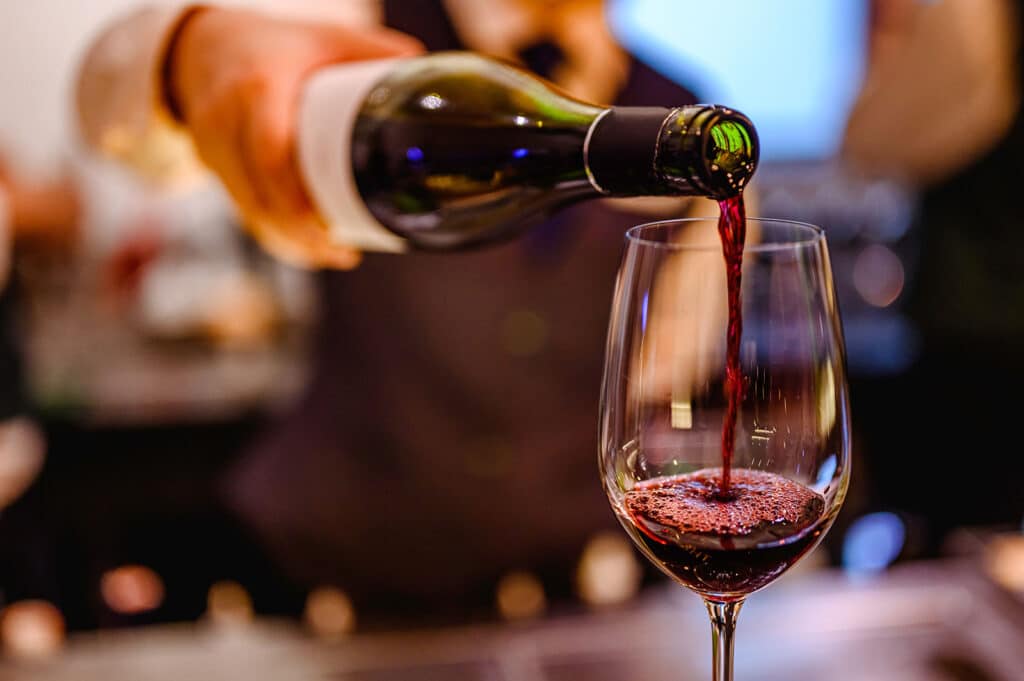
Yes, wine can absolutely get you drunk — and it often happens faster than people expect. A standard glass of wine (5 oz at 12% ABV) contains roughly the same amount of alcohol as a shot of liquor or a 12 oz beer. Most women will start feeling impaired after 2 glasses within an hour, and most men after 3. But “how much wine to get drunk” depends on your body weight, what you’ve eaten, the wine’s alcohol content, and how fast you’re drinking.
If you’ve been asking this question because you’re worried about your own drinking habits, that honesty matters, and we’ll cover warning signs worth paying attention to later in this article.
How Much Wine Before You Risk Getting Drunk?
Many people enjoy wine responsibly in moderation, but understanding when you’re approaching intoxication is crucial for your safety and wellbeing. The question isn’t really “how much wine to get drunk” it’s “how much wine puts me at risk?”
The answer: Less than you might think.
Legal intoxication in most states is defined as a blood alcohol content (BAC) of 0.08% Alcohol.org, but impairment begins well before you reach this threshold. Here’s what research shows about when wine consumption becomes risky:
For Women:
- After just 2-3 glasses of wine consumed within 1-2 hours, most women approach or exceed 0.08% BAC
- Impairment to judgment and reaction time begins after the first glass
- Individual factors like body weight and food consumption create significant variation
For Men:
- After 3-4 glasses of wine consumed within 1-2 hours, most men approach or exceed 0.08% BAC
- Like women, impairment begins well before reaching legal intoxication
- Physical size and drinking speed dramatically affect these numbers
| Body Weight | 1 Glass | 2 Glasses | 3 Glasses | 4 Glasses |
|---|---|---|---|---|
| 100 lbs | 0.05% | 0.09% | 0.14% | 0.18% |
| 120 lbs | 0.04% | 0.08% | 0.11% | 0.15% |
| 140 lbs | 0.03% | 0.07% | 0.10% | 0.13% |
| 160 lbs | 0.03% | 0.06% | 0.09% | 0.11% |
| 180 lbs | 0.03% | 0.05% | 0.08% | 0.10% |
| 200 lbs | 0.02% | 0.05% | 0.07% | 0.09% |
| 220 lbs | 0.02% | 0.04% | 0.06% | 0.08% |
Estimates based on standard 5 oz pours at 12% ABV consumed within one hour. Individual results vary based on metabolism, food intake, medications, and tolerance. A BAC of 0.08% is the legal limit for driving in most U.S. states, but impairment begins well below this threshold. These numbers are approximate guidelines, not medical advice.
Why These Numbers Are Only Guidelines:
These estimates assume average body weights (140 lbs for women, 180 lbs for men) and standard wine glasses (5 oz with 12% ABV). Your personal risk may be higher or lower based on:
- Your body weight: Smaller individuals reach dangerous BAC levels much faster
- Wine strength: That California Cabernet at 14.5% ABV affects you differently than a lighter wine at 10% ABV
- Food in your stomach: Drinking without eating dramatically accelerates alcohol absorption
- Your drinking pace: Three glasses over three hours is vastly different from three glasses in one hour
- Your alcohol tolerance: Higher tolerance doesn’t protect you from impairment or health risks—it often means you’re drinking more to feel effects
The Real Concern:
By the time you feel “drunk,” you’re well past safe levels of impairment. Your judgment becomes clouded before you realize it’s happening. You might think you’re fine to drive, make important decisions, or continue drinking when you’re actually significantly impaired.
A Safer Approach:
If you choose to drink wine, consider these harm-reduction strategies:
- Limit yourself to one glass per hour maximum
- Alternate each glass of wine with a full glass of water
- Always eat a substantial meal before and during drinking
- Never drink with the goal of “getting drunk”
- Avoid driving after any amount of alcohol consumption
- Be honest with yourself about why you’re drinking
When Wine Stops Being Moderate:
If you find yourself frequently drinking to the point of intoxication, if you’re calculating “how much to get drunk,” or if you’re drinking to cope with stress or emotions, these may be warning signs worth examining. Moderate drinking means staying well below intoxication levels—not pushing the boundaries of how much you can consume.
Look at the Wine Label
When you’re trying to determine how much wine will get you drunk — or how to space out your drinks over the course of an evening — you will want to take a look at the wine bottle in question. Labels on wine bottles actually reveal a lot of information; you’ll see what region the grapes originated from, and you should also see a percentage listed. Usually, this will be between 9% and 14% and you’ll notice the letters ABV. This stands for Alcohol By Volume, and it refers to the amount of ethanol alcohol present in this wine. The higher the percentage, the more inebriated you will become.
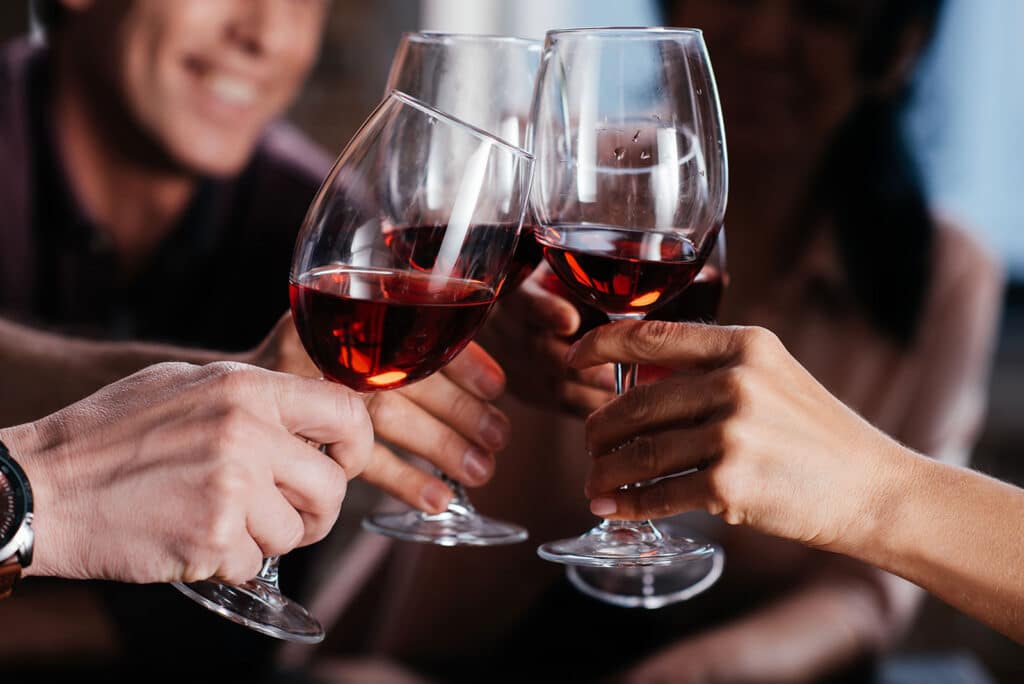
Common Wine Types by Alcohol Content
- Lower ABV (under 11%) Moscato d’Asti: 5–6.5%, Vinho Verde: 8–10%, Riesling (German Kabinett): 8–10%
- Moderate ABV (11–13%) Prosecco: 11–12%, Pinot Grigio: 11.5–12.5%, Sauvignon Blanc: 12–13%, Rosé: 11.5–13%
- Higher ABV (13–15%+) Chardonnay (California): 13.5–14.5%, Malbec: 13–14.5%, Cabernet Sauvignon: 13.5–15%, Shiraz/Syrah: 14–15.5%, Zinfandel: 14–16%
- Fortified Wines (15–22%) Port: 19–22%, Sherry: 15–20%, Madeira: 18–20%
Not all wine is created equal when it comes to alcohol content. That “light” glass of Moscato and a bold Zinfandel can differ by 10 percentage points in ABV, which means the Zinfandel could get you to a dangerous BAC level nearly twice as fast.
Our Wines Contain More Alcohol Than Our Ancestors’ Did
Did you know that climate change can affect ABV? With temperatures hitting record highs, the world’s grapes have been fermenting into alcohol at a higher rate. This has been an issue everywhere across the globe. Whether a vineyard is in France or California, chances are that it has had issues with making sure its varietals are balanced. When researchers recently found bottles of champagne in a shipwreck that was almost 200 years old, they noted that the ABV was indeed lower than what we see in bubbly bottles today.
Will One Bottle of Wine Get Me Drunk?
The majority of people will start to feel the effects way before hitting the bottom of a wine bottle. Women will typically begin to feel inebriated after having two glasses of wine while men usually report feeling tipsy or slightly once they’ve had three glasses of wine. When drinking the same amount of alcohol, why do women get drunker than men do? Much of the reason for this has to do with an enzyme, surprisingly enough. It’s called ADH (alcohol dehydrogenase), and it resides in the stomach and liver. Its job is to break down alcohol, and men have more of it than women do. As a result, women have more alcohol entering their bloodstream. Also, a man will often — but not always — be physically larger than a woman he’s drinking with; when someone has a higher body weight, they wield an advantage when it comes to being able to tolerate alcohol.
How Fast Are You Drinking?
There is a reason why you will see some people repeatedly reaching for the water on a night out; they realize that the faster they consume their alcohol, the more likely they are to catch a buzz or even get drunk. When you drink a glass of water in between ordering wine, you take that time to slow down your rate of consumption. This is an area where new drinkers often get into trouble, so it’s crucial to be on the lookout for any signs that you may be getting too tipsy. When it comes to feeling the effects faster than you anticipated, sometimes bubbles can be the culprit. Although this seems like it would be an urban legend, it is actually true. Carbonation encourages your body to absorb the alcohol faster. This is why you’ll see some people claiming to feel immediately buzzed after just a few sips of champagne or prosecco.
Can My Tolerance Increase If I Keep Drinking Wine?
If you make a habit of drinking wine to excess, then your tolerance will definitely increase. Unfortunately, this can become quite a cycle. Many people find themselves in a battle with their better judgment. Suddenly, one to two glasses of wine at night isn’t enough; they need the whole bottle to get to that euphoric state.

Does My Medication Affect How Much Wine I Can Have?
If you are on a medication, it is imperative for you to educate yourself on how that medication interacts with alcohol. Whether you’re taking blood pressure medication or you’re on an SSRI for depression-related symptoms, you will want to have all the facts in order before taking even one sip of wine. Although these medications can impact the wine’s effect on you, there are a plethora of other possible adverse reactions that you need to know about.
Will I Get Drunk Faster If I Didn’t Eat Dinner?
The short answer to this question is yes! If your stomach is empty, then the alcohol you’ve just imbibed will definitely hit your bloodstream faster than it would have if you had eaten a full meal.
Does Our Culture Make Excuses for Drinking Wine to Excess?
Recently, the casual nature of wine culture has made some people in the media question whether or not we have become too comfortable with drinking too much of it. Blogs about “mommy wine culture” have made people wonder if many in our society have been masking their feelings with a wine addiction.
Does Drinking One Bottle of Wine a Day Make You an Alcoholic?
This is a question that has come up a lot in pop culture recently. Brazilian Supermodel Gisele Bündchen, who no longer drinks alcohol, has been very open about the way she feels that wine affects her body. She has admitted to using wine as a crutch when she was in her twenties, drinking a bottle of wine every night. Actor John Stamos has also been reflecting on his wine drinking habits recently, stating in a book that he once drank a whole bottle of wine to cope with the fact that he had just gotten a DUI. Lately, it does seem as if there has been a cultural reckoning when it comes to wine. Some wonder if the articles from the 1990s proclaiming that wine was “healthy” may have set us up for failure.
Stages of Intoxication: Understanding How Alcohol Affects Your Body
When you drink wine, your blood alcohol content (BAC) determines how intoxicated you become. Understanding these levels of intoxication can help you recognize danger signs.
| Stage | Blood Alcohol Content (BAC) | Effects and Symptoms |
|---|---|---|
| Low Intoxication | 0.01-0.05% | Relaxation, mild euphoria, increased talkativeness. Motor coordination remains mostly intact. |
| Excitement Stage | 0.06-0.15% | Feeling “buzzed,” increased confidence and euphoria, impaired judgment. Slower reaction time, declining motor coordination, potential stomach irritation. Rate of consumption significantly affects progression. |
| Confusion Stage | 0.16-0.30% | Dangerous level. Significant confusion, impaired motor coordination, blurred vision, difficulty processing information. Memory blackouts and nausea are common. |
| Stupor Stage | 0.31-0.40% | Medical emergency. Loss of consciousness, depressed reflexes, dangerous drops in breathing rate. |
| Coma and Death | 0.41% and above | Life-threatening. Alcohol poisoning, coma, potential death. Call 911 immediately if someone shows signs of severe intoxication. |
The transition from relaxation to medical danger can happen faster than many realize, especially with higher ABV wines or drinking on an empty stomach.
Have You Been Drinking Too Much Wine?
If you’ve been questioning your relationship with wine recently, rest assured that you are far from the only one. Maybe you’ve been embarrassed by a friend peeking into your recycling bin and spotting so many bottles. Perhaps you’ve become a “regular” at your local wine shop or the clerk at the convenience store is all too familiar with your favorite brand. Whatever the warning signs are, chances are that they are highly personal to you and your situation. And there is no need to feel shame about exploring a change in your relationship with wine. Maybe you’d like more information about how you can get back to being the person who took an entire week to go through a bottle of wine. For some people, it really just is a matter of slowing down.

Talk to Someone Who Understands What You’re Experiencing
Regardless of what your questions about wine dependence may be, chances are that the folks at Garden State Treatment Center have heard them all before. In a world in which a lot of problematic drinking has been normalized, you may feel like you’re the only person feeling a certain way. You are not. Once you speak to a team member, it’s likely that you’ll feel a great sense of relief; getting control of your life often has that effect.
FAQs
What causes a hangover from wine?
How can I prevent a wine hangover?
Written by: The Garden State Treatment Center Editorial Team
Published on: January 14, 2024
Updated on: March 28, 2026