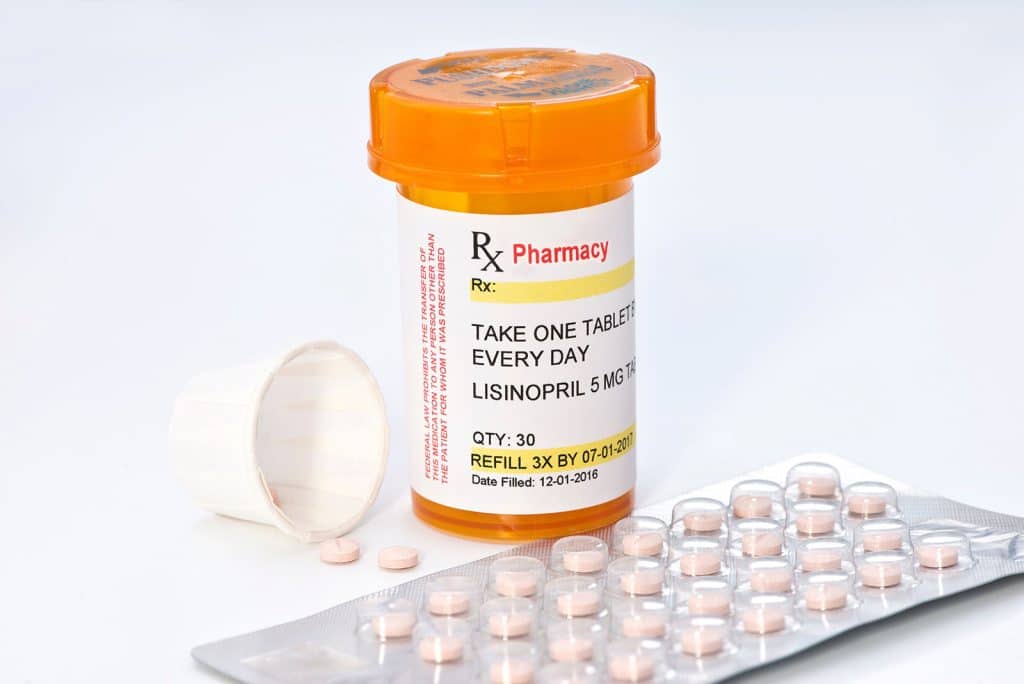
Physicians might prescribe lisinopril to improve patients’ odds of surviving after a heart attack or ease the symptoms of heart failure. Of course, they also use it to control high blood pressure.
But regardless of why you’re using it, it can be a life-saving medication. And you don’t want to take any risks here, no matter how small. So, it’s normal to wonder if it’s okay to drink alcohol with the drug.
Unfortunately, it’s not recommended to drink while taking lisinopril. The drug’s effectiveness could be compromised by drinking, and its side effects might become even more pronounced.
Today’s post explores the dangers of mixing lisinopril and alcohol in more detail. We’ll also go over your main options as both a drinker and a hypertension patient.
3 Reasons to Avoid Drinking Alcohol When You’re on Lisinopril
The risk of drinking while taking blood pressure medication varies from one case to another since it depends on a number of factors. Your medical history, age, and average alcohol consumption are just a few of these factors.

You’ll want to consult your healthcare provider for medical advice specific to your condition. However, most people are better off avoiding alcohol (or at least, limiting their intake) when they’ve been prescribed lisinopril.
Let’s see why that is the case.
1. Alcohol Can Make Your Blood Pressure Medication Less Effective
Lisinopril (sold under the brand names Zestril, Prinivil, and Qbrelis) is a type of medication called angiotensin-converting enzyme (ACE) inhibitor.
The drug’s mechanism of action is all in the name. It blocks an enzyme from converting the inactive angiotensin I to its active form, angiotensin II. The reason this is important is that angiotensin II’s main function is to constrict blood vessels.
So, ACE inhibitor drugs like lisinopril effectively widen your blood vessels, creating more room for blood to flow. This reduces the pressure inside your vessels and makes it easier for your heart to circulate enough blood around your body without straining.
What happens when you add a few drinks to the mix?
Well, one study looked at how alcohol would change the effect of ACE inhibitors on both systolic and diastolic (the top and bottom readings) blood pressure. The study focused on two groups with essential hypertension. One drank, and the other didn’t
The results? The drugs were 45% less effective in reducing systolic blood pressure and 76% less effective in dropping diastolic blood pressure in the group who drank alcohol.
2. You Might Cause Even More Symptoms
If you mix alcohol and lisinopril, you might actually end up with more cardiovascular symptoms than just high blood pressure.
The combination can cause problems with your heart rhythm, which healthcare professionals call arrhythmia.
3. Your Fall and Accident Risk May Increase
One of the most common side effects of lisinopril is lightheadedness, especially when you try to get up suddenly. This is also referred to as orthostatic or postural hypotension (low blood pressure). And it’s a bigger concern for patients who started taking the medication recently.
That’s why many physicians warn their patients to be extra careful during the first few days after starting their ACE inhibitor therapy.
Keep that in mind and consider the effects of alcohol on a person’s coordination and cognitive function. Now, it’s not hard to see how it would be a bad idea to drink alcohol when you’re new to lisinopril.
You’ll end up with an increased risk of fainting and falling. If you decide to drive or operate heavy machinery, you might get into a life-threatening accident.
Understanding the Side Effects: What to Watch For
When you mix lisinopril and alcohol, you’re not just dealing with one set of side effects—you’re dealing with how two substances interact in your body. Some people experience mild symptoms, while others face more serious complications.
Common Side Effects
These are the side effects most people experience when combining lisinopril and alcohol:
- Dizziness and lightheadedness – Especially when standing up quickly
- Severe drowsiness or fatigue – More pronounced than either substance alone
- Headaches – Often due to blood pressure fluctuations
- Dehydration – Both substances affect your body’s fluid balance
- Nausea or upset stomach – Can range from mild queasiness to severe discomfort
- Increased heart rate – Your heart may beat faster to compensate for low blood pressure
- Flushing or feeling warm – Due to widened blood vessels
Serious Side Effects (Seek Medical Attention)
These symptoms require immediate medical evaluation:
- Severe hypotension (extremely low blood pressure) – Can lead to shock or organ damage
- Fainting or loss of consciousness – Risk of injury from falls
- Chest pain or irregular heartbeat (arrhythmia) – Your heart rhythm becomes dangerously unstable
- Angioedema – Swelling of the face, lips, tongue, or throat1 (medical emergency)
- Kidney problems – Dark urine, decreased urination, swelling in legs/feet
- Liver complications – Yellowing of skin or eyes (jaundice), severe abdominal pain
- Severe allergic reactions – Difficulty breathing, hives, severe rash
How This Combination Affects Your Organs
Both alcohol and lisinopril are processed through your kidneys and liver. When you combine them, you’re essentially asking these organs to work overtime.
Your Kidneys: Lisinopril changes how your kidneys filter blood and regulate fluids. Alcohol is a diuretic, making you urinate more frequently. Together, they can stress your kidneys2, potentially leading to decreased kidney function—especially if you already have kidney disease or diabetes.
Your Liver: While lisinopril doesn’t directly harm your liver, alcohol certainly can. If your liver is busy processing alcohol, it may affect how your body metabolizes your medication, leading to unpredictable blood levels and effectiveness.
Warning Signs of Organ Stress:
- Decreased urination or very dark urine
- Swelling in your ankles, feet, or hands
- Persistent fatigue beyond normal tiredness
- Yellowing of your skin or eyes
- Unexplained nausea or loss of appetite
If you notice any of these signs, contact your healthcare provider right away.
Special Populations at Higher Risk
Certain people face significantly higher risks when combining lisinopril and alcohol. If any of these apply to you, complete abstinence is strongly recommended:
- Older Adults (65+): Your body processes both alcohol and medications more slowly, increasing the risk of dangerous side effects, falls, and injuries.
- Women: Less body water and fewer alcohol-metabolizing enzymes mean alcohol affects you more intensely and for longer periods.
- People with Kidney or Liver Disease: Both organs are already compromised, and this combination can accelerate damage. Alcohol is contraindicated if you have kidney or liver disease.
- People with Heart Failure or Cardiovascular Disease: Alcohol worsens heart failure symptoms, increases arrhythmia risk, and counteracts your medication’s benefits.
- People Taking Multiple Medications: Other blood pressure drugs, diuretics, diabetes medications, sedatives, or pain medications create dangerous interactions with alcohol and lisinopril.
- People with Diabetes: Alcohol affects blood sugar unpredictably and can mask low blood sugar symptoms—especially dangerous with diabetes medications.
- Pregnancy and Breastfeeding: Neither lisinopril nor alcohol is safe. Lisinopril can cause serious harm or death to an unborn baby3.
If you fall into any of these categories, talk honestly with your healthcare provider about your specific situation.

Why Heavy Drinking Is Risky for All Blood Pressure Patients
Of course, some people are more susceptible to the adverse effects of mixing alcohol and lisinopril.
Older folks, for instance, usually have trouble breaking down alcohol. So, it remains in their systems longer, creating even more time for potential drug interactions. Women, as well, tend to be more vulnerable to the physiological response to alcohol than men.
However, everyone taking lisinopril needs to worry about the possible interactions. In fact, everyone with blood pressure issues should mind their alcohol intake.
Here’s why:
Alcohol Raises Your Blood Pressure
Alcohol in and of itself can cause high blood pressure.
In cases of binge drinking, the spike can be temporary. That’s because your nervous system gets stimulated, increasing your heart rate and narrowing your blood vessels.
But those who tend to consume high amounts of alcohol regularly risk long-term high blood pressure. So, if you’re already a hypertension patient, your chronic drinking issues will only make your health condition worse.
Note that there’s a lot more damage that alcohol brings to your cardiovascular system in general. Your heart has to work under strain, fatty materials build up on your blood vessel walls, and your risk of a heart attack increases.
Alcohol Interacts With Other Hypertension Medications, Not Just Lisinopril
Unfortunately, lisinopril isn’t the only blood pressure medication that interacts with alcohol.
According to the National Institute on Alcohol Abuse and Alcoholism (NIAAA), the fainting and irregular heartbeat side effects can also happen when alcohol is mixed with the following drugs:
| Generic Name | Drug Classification | Common Brand Names |
| Amlodipine | Dihydropyridine calcium channel blocker (CCB) | Norvasc, Katerzia, Norliqva, Sdamlo |
| Verapamil | Nondihydropyridine CCB | Calan, Verelan |
| Enalapril | ACE Inhibitor | Vasotec |
| Quinapril | ACE Inhibitor | Accupril |
| Hydrochlorothiazide | Thiazide diuretic | Hydrocot, Microzide, Inzirqo |
| Losartan | Angiotensin II receptor blocker (ARB) | Cozaar, Arbli |
| Doxazosin | Alpha blocker | Cardura |
| Terazosin | Alpha blocker | Hytrin, Tezruly |
| Prazosin | Alpha blocker | Minipress |
Notice how this list contains names from different categories of hypertension medications. Plus, the potential risks are worse than just dizziness for some of these drugs.
Verapamil, for instance, can slow down ethanol elimination from the body. That means that when you drink while you’re on verapamil, the intoxicating effects of alcohol will last even longer than usual.

Lisinopril and Alcohol: Where to Go From Here
Now that you know why mixing alcohol and lisinopril is a bad idea, you might be wondering what your next step should be.
Should you stop drinking? Is dropping your intake to one or two drinks a day enough? Can you stop taking your hypertension pills instead?
Let’s explore your options.
1. Don’t Stop Lisinopril Without Consulting a Doctor
You might be tempted to stop taking the medication in an attempt to feel better. But no matter what you do, you shouldn’t stop your blood pressure medications without consulting your healthcare provider.
A doctor who’s familiar with your medical history will help you switch to other drugs if needed. This way, you won’t leave your heart condition unmedicated. They’ll also offer advice about the best way to taper off lisinopril to avoid the side effects.
2. Discuss Your Alcohol Use Patterns With Your Physician
Hiding or forgetting to mention your daily alcohol intake (or any substance use issue, for that matter) during your appointment will only backfire.
Make sure to tell your doctor about your drinking habits. After all, you want them to be aware of the potential interactions when picking the best treatment option for your hypertension.
3. Consider Quitting or Cutting Your Alcohol Consumption
If you’ve recently been put on lisinopril, it’s better to stop drinking for a while. The risk of sudden blood pressure drops (and thus, falling or passing out) is higher during the first period of the treatment. Any alcohol intake can increase your injury risk.
Does that mean that it’s safe to return to heavy drinking later? Not really. Experts recommend limiting alcohol intake (or quitting, when possible) for patients who need to control their blood pressure.
In fact, research shows that reducing your alcohol intake will lower your blood pressure readings in a dose-dependent manner. The less you drink, the better the outcome. Quit altogether, and the outcome becomes even better because you give your body enough time to recover.
Needless to say, lower blood pressure isn’t the only perk to expect when you quit. Abstinence can improve your life in the long run in more than one way.
Some of the benefits awaiting you are:
- Boosted energy levels
- Lower risk of cancer and cardiovascular diseases
- Better work/academic performance
- Healthier relationships with your loved ones

Quitting Can Be Hard. Find the Help You Need Today
To recap, drinking alcohol while you’re on lisinopril is risky. Alcohol can make the drug less effective, cause new symptoms, or worsen the drug’s side effects.
Not only that, but drinking can also increase your blood pressure in the long run, making your cardiovascular condition even worse. The best option here is to limit your alcohol consumption or cut it entirely.
That said, we understand that quitting can be hard and even dangerous, especially for heavy drinkers. Our accredited alcohol addiction treatment professionals can help you detox safely. They’ll also tailor the treatment and aftercare plans to reduce your relapse risk.
Contact Garden State Treatment Center today to see if our flexible rehab programs are a good fit for your recovery journey.
Citations
- https://medlineplus.gov/ency/article/000852.htm ↩︎
- https://www.kidney.org/atoz/content/alcohol ↩︎
- https://medlineplus.gov/druginfo/meds/a692051.html ↩︎
Medical Disclaimer: The content on this page is provided for informational purposes only and is not a substitute for professional medical advice, diagnosis, or treatment. While we strive to provide accurate and up-to-date information about lisinopril, alcohol interactions, and addiction recovery, medical knowledge changes constantly. Always seek the advice of your physician or other qualified health provider with any questions you may have regarding a medical condition or medication changes. Never disregard professional medical advice or delay in seeking it because of something you have read on this website. If you think you may have a medical emergency, call your doctor or 911 immediately.
Written by: The Garden State Treatment Center Editorial Team
Published on: October 29, 2025
Updated on: December 2, 2025