
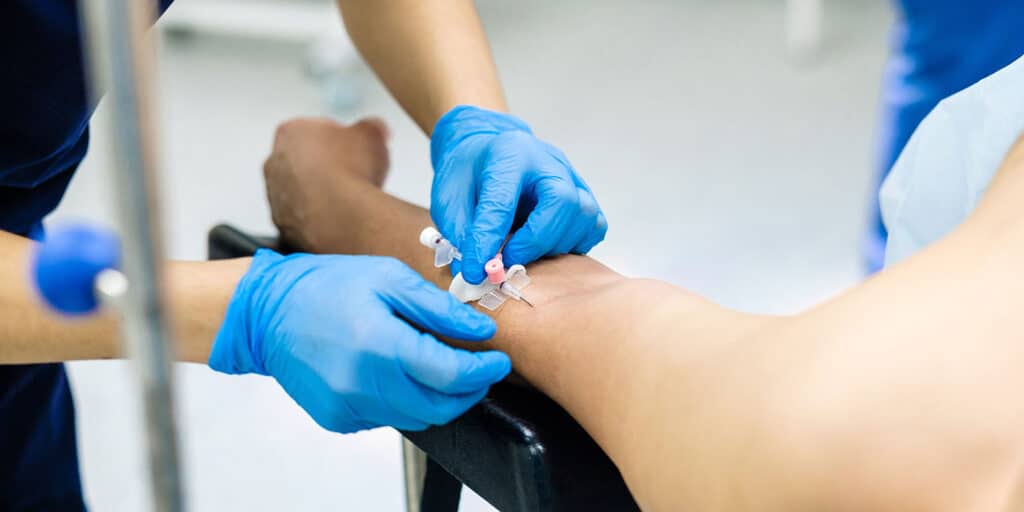
Intravenous administration of drugs is the riskiest way to use drugs. When you street drugs, the majority of the risk is related to the needle. The drugs are dangerous, and usually, there’s no way to know how strong they are or what else may be in them. It’s even unsafe to use them along with other substances like alcohol, marijuana, and prescription drugs.
Some drugs that can be injected are:
- Bath Salts
- Heroin
- Cocaine
- Methamphetamine
- Ecstasy
- Ketamine
- PCP
- Prescription drugs like Vicodin and Adderall
Using drugs intravenously, a person has most likely a progressed form of addiction. Besides addiction to the drug, being more likely to overdose, many other major health concerns follow the repeated injection of drugs.
Dangers of Abscesses from Injecting Drugs
Besides viruses, other health issues can come over time with repeated injection of drugs. There is the damage that can be done to internal organs of course but there are many different types of damage a user can do to their skin as well. This can be a result of injecting regularly, using potentially tainted needles, or injecting into fat or muscle by accident due to missing the vein, and injected right under the skin called “skin popping.” This can result in a painful lump that could potentially cut off blood flow to the area.
Other skins problems that can arise are:
- Heavy bruising
- Abscesses
- Severe bacterial skin infections like cellulitis
- Fungal infections
Bacterial infections can cause serious complications and even death. If not treated. One such common bacterial infection is abscessed. According to the National Institute of Health (NIH), abscesses are subcutaneous masses, filled with pus and debris, resulting from one’s bodily defenses against an outside infectious agent. Abscesses result from the introduction of an infectious agent, often Staphylococcus aureus, into the body through unsterile injection equipment or unclean skin.
As time goes on and the skin gets infected, the body’s immune system tries to fight the infection, which causes inflammation from white blood cells sent to the infection site. Pus forms from the resulting mixture of germs, dead tissue, and white blood cells, both dead and living.
Abscesses must be treated by a medical professional. An abscess is a collection of pus that almost always requires incision and drainage by a clinician to resolve safely. Do not attempt to squeeze, lance, or drain an abscess yourself. A doctor may prescribe an antibiotic to treat an abscess that is large or has become infected.
Recognizing an Abscesses
Abscesses are usually easy to recognize. Abscesses are typical:
- A round or oval-shaped mass with dark puss at the center
- Located anywhere on the body, but mostly at or around the injection site
- Painful, swollen, and tender to the touch
- If allowed to grow unchecked, the abscess may spread into the bloodstream or into deeper tissues, where the septic contents can create further health complications
Complications of an Untreated Abscesses
An abscess from injection drug use is very unlikely to resolve safely on its own, and leaving one untreated can lead to the following complications:
- Swollen lymph nodes
- Sepsis, or the spreading of the infection throughout the body
- Skin tissue death (gangrene and possible limb amputation)
- Endocarditis (inflammation of the heart lining)
- Infection of the bone (osteomyelitis)
- Recurrent skin infection
- Death
Treating an IV Drug Use Abscesses
Abscesses related to injection drug use should never be treated at home. Because bacteria can spread from the injection site into deeper tissue and the bloodstream, these abscesses carry a high risk of serious complications, including cellulitis, sepsis, bone infection, and infection of the heart valves (endocarditis). Seek medical care for any abscess, and go to an emergency room immediately if you notice spreading redness or red streaks, fever, chills, rapid heartbeat, or worsening pain. If cost or judgment worries are keeping you from care, know that emergency departments treat these infections routinely and that harm reduction clinics and community health centers can also help.
There are many addiction treatment centers in New Jersey, but what makes Garden State Treatment Center different is our commitment to your success. From the moment a client steps through our doors, you’ll have our unmatched attention. We believe that being with you every step of the way throughout the early recovery process is the key to avoiding relapse or pitfall. Get help now at Garden State Treatment Center.
Written by: The Garden State Treatment Center Editorial Team
Published on: August 12, 2020
Updated on: July 3, 2026